Sunday, March 08, 2015

The OA Interviews: Alison Mudditt, Director, University of California Press

As the open access train rolls towards the future more and more traditional scholarly publishers are jumping on board. When and how they do so is not an easy decision—as Wiley’s Alice Meadows pointed out recently on the Scholarly Kitchen. Nevertheless, OA is now inevitable, so the plunge has to be taken sooner or later.

The University of California Press made its move in January, launching two new open access programmes—Collabra and Luminos.
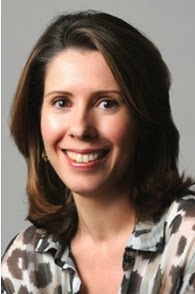
Alison Mudditt

Collabra is a mega journal that will initially focus on three broad disciplinary areas (life and biomedical sciences, ecology and environmental science, and social and behavioural sciences), and then expand into other disciplines at a later date. Collabra is expected to publish its first articles in the next month or so.

Luminos is an open access monograph publisher that will publish its first book this autumn.

What is the context in which UC Press’ move needs to be seen?

The key challenge open access poses for publishers is how to develop a workable business model. After all, since OA requires that research publications are made freely available, the traditional subscription model no longer works. Understandably, therefore, publishers have concluded that the costs of producing OA journals and books will have to be recovered at the author’s side of the process (via author-side fees) rather than at the reader’s side (via subscriptions). 

The question therefore is: how can this be done in a way that it is both workable and sustainable? Today there are two primary ways of attempting to do this—the article-processing charge (APC) and the membership scheme.

In the former case, the onus for finding the funds needed to pay to publish falls on authors. This means that if they cannot persuade their institution or funder (assuming they have one) to pay the bill, they may have to pay it themselves. (Most OA publishers advertise fee waivers, but it is not entirely clear how many researchers benefit from these, especially those offered by commercial publishers).

In the latter case, the author’s institution takes on the responsibility—by bulk-buying APCs (publication rights if you like) for all its researchers. Normally, this means the institutional library will pay subscription-like annual fees to a number of open access publishers. For authors this has the benefit of making OA publication services free at the point of use, although there are variations on this model—e.g. here and here

And as large subscription publishers like Springer ramp up their open access activities we are seeing new-style big deals emerge whereby libraries pay a single annual fee that covers both access to the publisher’s paywalled content and publishing rights for researchers who want to publish in their open access journals.

These new models have their critics, and OA advocates frequently point out that the majority of OA journals today do not charge a publication fee. The implication is that there are other, better, ways of funding open access. Nevertheless, as large commercial subscription publishers increasingly move into the open access space (offering OA journals and, increasingly, OA books), the tide is currently moving strongly in the direction of author-side pay-to-publish models. 

Today, therefore, unless their institution has a membership scheme with the OA journal  in which they want to publish, authors looking to embrace OA still face the challenge of finding some way of paying the publication fee. This can be very difficult, particularly for researchers who have little or no funding (as UCLA behavioural and evolutionary ecologist Peter Nonacs describes here).

Those who work in subjects where the monograph is the primary vehicle for communicating research find themselves in a particularly hard place. Consider, for instance, that where a commercial publisher like Springer charges $3,000 to make an article open access (and non-profit OA publisher PLOS charges between $1,350 and $2,900) the cost of publishing an OA book can be as much as $17,500 + taxes (which is what Palgrave Macmillan charges). Clearly, this poses a huge challenge.

In the hope of addressing this issue Knowledge Unlatched—a not-for-profit organisation coordinating a global consortium of libraries to share the costs of making books open access—has pioneered a library consortium approach. 

The model used here is not unlike the membership schemes used by OA journal publishers, but what libraries pay depends not on the number of texts their researchers publish, but on how many other libraries join the consortium. Basically, publication costs are shared between institutions on a per title basis. Knowledge Unlatched estimates these costs at around $13 to $60 per library, per book. Clearly, time will tell how successful this approach proves.

Variations on a theme


So what is UC Press bringing to the party? Essentially, while embracing the two primary author-side payment models, the Press has introduced some interesting innovations. Let’s describe its approach therefore as variations on a theme.

The first point to make is that as a non-profit publisher subsidised by its host university, and with its own foundation, UC Press has been able to set Collabra’s APC at $875. This is not only significantly lower than what commercial publishers charge, but considerably lower than PLOS ONE, the pioneering mega journal launched by non-profit publisher Public Library of Science in 2006. PLOS ONE charges $1,350 per paper.

Moreover, only $625 of this fee will go to Collabra, with $250 being pooled in what the publisher calls a “Research Community Fund”. This fund is then used to pay editors and reviewers a fee for their services. Explaining how it works to Scholastica, UC Press’ director of digital development Neil Christensen said, “[O]n a quarterly basis we look at activities: Reviewer A had X many decisions, Editor A had X many decisions, and for each decision there is a point value. You take the total sum of the money in the pool and then divide it by the total sum of the points that have been generated for that period, and then allocate the money based on how many points or value each individual has contributed.”

It is this novel feature that has attracted most attention for Collabra (see here and here for instance). But in fact the more interesting aspect of Collabra’s model is that editors and reviewers are invited not to take the money they have earned, but to give it away—either by donating it to the Collabra Waiver Fund, or to their own institutional open access fund. By doing so, they can help researchers who do not have the money needed to publish make their work open access too.

What this does is draw out attention to the fact that scholarly publishing is essentially a communal and collaborative activity, and one that works best when scientists and scholars are able to share their findings in as frictionless a way as possible. While the Internet has made it technically much easier to share research, current models of open access have made it financially harder (since authors now need money to pay to publish). As noted, this is especially difficult for those in subjects with little in the way of funding. With Collabra, UC Press is proposing that a possible way of mitigating this new obstacle is to invite researchers to share the costs of open access publishing amongst themselves in an equitable way.

And with this same aim in mind, Collabra plans to “pair” different research fields. As Mudditt explains below, “One of Collabra’s core innovations is to test the thesis that we can use income from fields with higher research funding to support those with little or no funding. As such, this requires us to publish both in fields that have substantial funding (such as the life sciences) and those that have far less (in this case, social and behavioural sciences).”

The same community-focussed approach is also inherent to the Luminos model. While its publication fee ($15,000) is comparable to that charged by other publishers, UC Press will subsidise the fee through a library membership scheme (research libraries are being asked to pay an annual fee of $1,000 in order to “directly support researchers in getting vital work into the world” and to “help ensure access to this work is open and free to everyone”). The publishing costs will also be directly subsidised by UC Press. As a result, it is expected that the cost to the author will be halved to around $7,500. UC Press assumes that in most cases the author’s institution will pay the subsidised fee, but it has also created a Luminos fee waiver fund for those unable to obtain institutional support.

And in a similar collaborative spirit, UC Press is working with the California Digital Library (courtesy of a $750,000 grant from the Andrew W. Mellon Foundation) to develop a web-based open-source content management system to support the publication of open access monographs in the humanities and social sciences. When complete, the system will be made available to the wider community of academic publishers, especially university presses and library publishers.

So far as licensing goes, UC Press has decided to directly emulate what other OA publishers are doing. All the papers published by Collabra, for instance, will be licensed under a CC-BY licence—as they are with PLOS eLife, PeerJ, and F1000Research. And authors publishing with Luminos will be able to choose from a range of Creative Commons licences, as they can with Knowledge Unlatched. When asked on the Scholarly Kitchen blog about the latter decision, Mudditt explained that research undertaken by UC Press (and by Knowledge Unlatched) had “unearthed significant concerns from authors about losing control of their material.”

In summary, while UC Press’ OA programmes could be described as variations on a theme, they come with some interesting innovations. These innovations remind us that scholarly communication works best when it experiences as little friction (both technical and financial) as possible. They also remind us that communicating research is essentially a communal and collaborative process. And since for some authors open access introduces financial obstacles that did not previously exist, it follows that the research community needs to come up with new non-discriminatory ways of sharing the costs of scholarly communication.

It is also possible that today’s author-side pay-to-publish OA models may not prove workable in the long term. The OA membership schemes being introduced by large journal publishers, for instance, seem destined to recreate the dysfunctional market conditions that subscription publishers are accused of creating with the big deal. As such, it is not currently clear that open access will solve the affordability problem that caused many to join the OA movement in the first place.

But the good news is that if publishers like UC Press continue to experiment, and to innovate, both the accessibility and the affordability problems may eventually be solved.

To find out more about UC Press’ open access plans please read Mudditt’s answers to my questions below.

Wednesday, February 18, 2015

Open Access and the Research Excellence Framework: Strange bedfellows yoked together by HEFCE

When the Higher Education Funding Council for England (HEFCE) announced its open access policy last March the news was greeted with great enthusiasm by OA advocates, who view it as a “game changer” that will ensure all UK research becomes freely available on the Internet. They were especially happy that HEFCE has opted for a green OA policy, believing that this will provide an essential green component to the UK’s “otherwise one-sided gold OA policy”. The HEFCE policy will come into effect on 1st April 2016, but how successful can we expect it to be, and what are the implications of linking open access to the much criticised Research Excellence Framework (REF) in the way HEFCE has done? These are, after all, strange bedfellows. Might there be better ways of ensuring that research is made open access?
 
Yoked together
What OA advocates particularly like about the HEFCE policy is that in order to comply researchers will not have to find the money needed to pay to publish in gold OA journals (as they are asked to do with the OA policy introduced by Research Councils UK in 2013). Rather, the HEFE policy states that only those papers that have been deposited in an open repository (on acceptance) can be submitted to REF2020, and that it is agnostic on whether researchers opt for green or gold.

HEFCE assumes that since no UK academic will want to risk not being submitted to the REF, they will ensure that copies of all their peer-reviewed papers and conference proceedings are made freely available on the Internet, regardless of whether they publish in OA or subscription journals. Not being submitted to the REF can have serious consequences for a researcher’s career.

Will HEFCE’s assumption prove right? At the time it announced its policy the funder cited some research implying that compliance levels will be very high. As it put it, “Our analysis of a sample of journal articles and conference proceedings submitted to the current REF shows that authors could have achieved 96 per cent compliance with the access requirements in this policy, had the policy been in place for REF2014. The remaining 4 per cent of outputs would have remained eligible for submission to the REF as exceptions.”

Does this mean that we can anticipate that 96% of journal articles and conference papers produced by UK researchers will become freely available on the Internet? I explore this and other issues in the PDF file linked below.

Some of the points I make are as follows:

·         There are a number of reasons to believe that the HEFCE policy will not make as much UK research freely available as OA advocates anticipate, not least because the number of researchers submitted to the REF is surprisingly low. In addition, the excessively punitive nature of the REF may be likely to alienate researchers from open access more than endear them to it.

·         By tying open access compliance to the REF, HEFCE has opened the door for university administrators to appropriate OA for their own ends. As such, the HEFCE policy can be expected to increase the bureaucratic scrutiny that UK researchers are subjected to, and encourage ever greater micromanagement. This is likely to further alienate researchers from open access.

·         Between them the RCUK and HEFCE policies look set to be extremely costly to manage and police. This will inevitably see money that would otherwise be used to do research and hire new researchers siphoned away to pay administrators, and to cover management overheads.

·         As things stand, historians of the open access movement may be inclined to conclude that UK OA advocates made a strategic error in seeking to co-opt government to their cause, overlooking the fact that government has its own agenda, and so would inevitably seek to capture and mould open access to fit that agenda.

·         Specifically, the HEFCE policy needs to be seen in the context of the UK government’s neoliberal agenda, an agenda that has become increasingly focused on commodifying higher education, and now seems intent on encouraging excessive commodification of the research produced in universities as well.

·         Meanwhile gold open access is being appropriated by publishers, with the apparent blessing of the UK government. As a result, publishers are migrating their journals to an open access environment on their own terms, and in a way that locks their current profit levels into the OA environment, even though those profits are universally held to be unacceptably high.

·         OA advocates have always argued that open access is inevitable and optimal. If that is right, then the issue is not whether open access will become a reality, but how and when it will. So the key question is this: how does one create a culture in which openness is viewed as the norm? Is it better to try and win hearts and minds by engaging people in a debate about open access, telling them about the benefits, and creating incentives to encourage them to embrace it? Or is it better to try and force them to embrace it by tying it to punitive regimes that end up excluding the majority, and micro-managing everyone to a standstill.

·         Green OA advocates insist that compulsory policies are essential, since they are the only way of getting OA repositories filled. As such, the HEFCE policy is modelled on the much-celebrated OA policy introduced in 2007 at the University of Liège. This was the first policy to make deposit in an institutional repository a requirement for researcher evaluation.But was it the right model for a UK funder like HEFCE?

·         An important issue with the HEFCE policy is that the principles inherent to the OA movement are those of sharing and egalitarianism. By contrast the REF is built on the principles of exclusion, elitism and punishment. These are strange bedfellows, and we need to wonder how the elitism of the REF can be viewed as compatible with the idealism of open access.

·         Is compulsion really essential? There is, after all, an alternative green OA model — the so-called Harvard model. This is a voluntary approach. It is worth noting that although Harvard’s repository (DASH) does not currently boast as many deposits as the University of Liège’s ORBi repository, it is nevertheless growing at an exponential rate, and it experienced twice as many downloads as ORBi last year. Is not the ultimate test of a successful repository the number of downloads, not the number of uploads?

·         OA advocates would rightly argue that there is a limit to what a comparison of just two OA repositories can tell us. After all, they might say, there is no shortage of universities with weak OA policies and empty repositories. While this is true, it points to the fact that open access advocates in those institutions have failed to make the case for OA to their peers. It is for this reason that they have turned to funders and governments to force OA on their colleagues. This could turn out to be a dangerous game to play.

·         Open access advocates can rightly boast today that they are persuading more and more funders and governments to force their peers to embrace OA. But this is not so much a victory for advocacy as a victory for top-down compulsion, and in many cases it is likely to lead to a further erosion of researchers’ rights.

To read the full document please hit the link here [29 page pdf].

Monday, December 15, 2014

The Open Access Interviews: Dr Indrajit Banerjee, Director of UNESCO’s Knowledge Societies Division

The mission of UNESCO, which was founded in 1945, is to “contribute to the building of peace, the eradication of poverty, sustainable development and intercultural dialogue through education, the sciences, culture, communication and information.”
Indrajit Banerjee
An important plank in that mission is a commitment to help build inclusive and equitable knowledge societies. We should not be surprised, therefore, that UNESCO supports the Open Access movement, we should not be surprised that it was the first UN agency to adopt an OA policy, and we should not be surprised that it now makes its own publications Open Access.

Today UNESCO’s OA repository (OAR) provides free access to over 500 of its own books, reports and articles in over 11 languages, and in recent years it has created a number of OA portals, directories, knowledge banks and Open Access indicators.

In actual fact, argues Indrajit Banerjee, a commitment to both openness and to science has been implicit in everything UNESCO has done since it was founded in 1945. Immediately after the Second World War, for instance, it was one of the chief architects of the portion of the 1948 Universal Declaration of Human Rights aimed at safeguarding the rights of researchers. Specifically, Article 27 of that declaration asserts that everyone has the right to freely share scientific advancement and its benefits.

Subsequently, in 1974, UNESCO proposed a set of special recommendations concerning the status of science researchers; and in 1999 it organised a World Conference where a declaration on science and the use of scientific knowledge was agreed.

UNESCO’s advocacy for Open Access as such began shortly after the 2003 Budapest Open Access Initiative (BOAI), where the term Open Access was first adopted, and a definition of OA agreed. That year UNESCO had its first high-level success in OA advocacy, when it successfully lobbied for universal access to scientific information and knowledge to be included as one of the Action lines (C3) of the World Summit on Information Society (WSIS) process.

In 2009, UNESCO was requested by its member states to draw up a strategy for Open Access, a strategy approved at UNESCO’s 187th session in 2011. This contains a set of short, medium and long-term action plans (to be achieved within set time frames) to assist governments strengthen the processes for granting irrevocable rights of access to copy, use, distribute, transmit and make derivate works of research outputs in any format, within certain constraints.

The strategy also stresses that UNESCO should place particular emphasis on making publicly-funded scientific information (journal articles, conference papers and datasets of various kinds) freely available.

As a global organisation with 195 member states and 9 associate member states, much of UNESCO’s work takes place at the level of national governments and regions. To that end it regularly convenes high-level meetings in order to educate national governments about the benefits of OA. It also commissions research, reports, and guides on OA (often in partnership with other large organisations like the EU).

Given its broad mission, UNESCO views Open Access not as an end in itself, but as one of a number of important tools that can help achieve its wider objective. The toolkit includes other free and open approaches like Open Data, Open Educational Resources, and Free and Open Source Software, plus tools designed to facilitate and encourage sharing such as Creative Commons licences.

Above all, UNESCO believes that the success of OA depends on effective capacity building. In the context of OA this implies facilitating “a set of activities to improve awareness, knowledge, skills and processes relevant to the design, development and maintenance of institutional and operational infrastructures and other processes for implementing Open Access”.

And with its focus on creating inclusive and equitable knowledge societies, UNESCO approaches Open Access from the perspective of human rights and the eradication of poverty, and sees ICTs playing a vital role in achieving its objectives in these areas. Its two global priorities currently are Africa and gender equality. As such, it is determined to ensure that Open Access is implemented in ways likely to help, rather than further marginalise, developing nations, and in a gender neutral way.

In light of all this, as the UN’s Millennium Development Goals give way to the Sustainable Development Goals, UNESCO is keen to embed Open Access into the new goals, viewing OA as a vital tool for achieving them.

Given its international perspective, and its authority, UNESCO also believes that it is ideally suited to oversee a global debate on Open Access, a debate that — in light of the growing danger that Open Access could end up excluding rather than including the developing world — is now pressing. To this end, UNESCO hopes to organise the first international congress on OA.

To get a better sense of UNESCO’s interest in, and work on, OA, and what it feels to be the key issues going forward, I sent seven questions to the director of UNESCO’s Knowledge Societies Division Indrajit Banerjee. The answers turned out to be admirably comprehensive, so I list a few choice quotes from Banerjee’s answers below. I urge everyone to read the full text.

UNESCO’s INTEREST AND ROLE IN OPEN ACCESS

·         The primary reason for UNESCO to be involved in Open Access stems from the fact that the organization believes in “Maintaining, increasing and diffusing knowledge by encouraging cooperation among the nations in all branches of intellectual activities”.

·         UNESCO’s role in the global Open Access movement is to foster OA at the highest possible level by continuing to build on the pillar of universal access to information and knowledge to empower local communities by bringing experts together and utilizing its global network of regional and field offices, Institutes and Centres.

·         Guided by the organization’s founding principle that universal access to information is the key to building peace, sustainable economic development and intercultural dialogue, UNESCO must continue to raise awareness, formulate policies and build capacities to promote Openness in content, technology and processes, with particular emphasis on scientific information.

·         In an era where the World Wide Web plays an increasingly vital role in the intellectual development of societies, information digitization has revolutionized the means by which we share knowledge. As the ‘intellectual’ agency of the United Nations, UNESCO has a central and critical role in encouraging the universal sharing of all forms of knowledge in real time to build inclusive Knowledge Societies. This may be through the classical form of dissemination, but more importantly by supporting the Open Access movement enabled through the power of the Internet.

UNESCO’s VIEWS ON CURRENT ISSUES IN OPEN ACCESS

·         We understand that OA publications are underrated because there is a lack of a policy that fully respects the effort behind the publications. There is a serious concern about peer review processes employed by OA journals.

·         There is an increasing concern that although the OA mode of research publication is becoming increasingly popular, it has not positively impacted the ability of researchers from developing countries to publish their research works.

·         The policy issues surrounding OA, adoption of policies (and/or mandates), implementation of policies (and/or mandates), monitoring and evaluation of these policies (and/or mandates) still need to be improved for most countries.

·         Furthermore, in the countries which have formulated and established OA policies/mandates, they have not been able to produce any solid evidence that OA is indeed having a positive impact on knowledge production and dissemination in the country. As the contribution of Open Access to the cost of research saved and the amount of knowledge gained are still not properly evaluated, the condition of “lead-by-example” is lacking.

·         We have also noted that within countries, those who can make a difference still lack a good understanding of OA and therefore do not fully support the OA movement, for fear of job loss and negative impact on its publishing industry.

·         Development, sophistication or understanding of OA is not evenly distributed, by geography or by subject. There is a strong need for the cross-fertilization of ideas and conditions for synergy to be properly discussed and explored in their entirety.

·         As the Global South catches up with the North in terms of scientific output, for instance, it allows for greater innovation in OA, and provides opportunities for developed countries to adopt some of the less costly OA methods that have emerged in developing countries. So, for instance, innovation in Latin America is enabling a lower APC cost base. New models like this could benefit the North.

·         At the same time, innovative methods from the North are being implemented in some developing countries. This cross-fertilisation could be very productive and so we are documenting the processes involved.

UNESCO’s PLANS FOR OPEN ACCESS

·         OA is central to UNESCO’s activities in the future. It is part of our Open Solutions programme and we are convinced that Open Access should be an integral agenda in any effort to create Knowledge Societies.

·         UNESCO must mobilize stakeholders to organize regional consultations and explore the possibility of organizing the first international congress on Open Access to scientific information and research. This international congress should analyse the existing national and international legal framework concerning Open Access and examine the necessity for the elaboration of a new international instrument.

·         UNESCO must also play a role in combining the context of Open Access within the broader understanding of Openness and link it with Open Educational resources (OER); Open Training Platform (OTP) and Free and Open Source Software (FOSS).

·         UNESCO is also concerned about the role that Open Access can play in realizing Post-2015 Development Goals. Dedicated research is currently on going to identify the potential of Open Access within the broader context of SDGs.

·         As a specialized agency of the UN system, UNESCO is playing its part in analyzing the concern about poverty (and other human challenges) and is committed to making Open Access one of the central supporting agendas to achieve the SDGs.

·         Out of 17 goals proposed for the next SDGs, at least 10 goals need constant research inputs. Given that these goals must be achieved globally, there is an absolute need for any restriction to disseminate research outputs to be comprehensively addressed. So in the next 15 years, OA to research will play a fundamental role in supporting efforts to achieve these goals.

·         UNESCO is working with its partners to provide a closer look at the Impact Factor. While the existing bibliometric, scientometric and altmetric approaches are robust, their upstream usage has remained very limited.

·         The extent to which the Knowledge Divide is narrowed, and to which we are able to create societies that are truly Knowledge Societies, will determine the pace of development. OA has the potential to lessen the existing knowledge divide. This gap goes beyond the rifts in mere access to ICT. It refers to the gaps that exist across all the four building blocks of Knowledge Societies, namely: Knowledge Creation; Knowledge Preservation; Knowledge Dissemination; and Use of Knowledge.

·         Opening access to knowledge is thus a fundamental part of the approach that can open and address the many jagged facets of Sustainable Development. OA uses ICTs to increase and enhance dissemination of scholarship. Sustainable Development and the creation of Knowledge Societies therefore are two sides of the same coin. 

·         The theme of inclusive Knowledge Societies continues to be at the heart of UNESCO’s work to fulfil the WSIS objectives. Inclusive Knowledge Societies are societies in which people have ready access to information and communications resources, in languages and formats that suit them, and the skills to interpret and make use of them. The Organization’s future work will thus be to establish the context of OA within the broader framework of inclusive Knowledge Societies. UNESCO will continue to pursue this objective vigorously through its own programmes on OA as well as in partnership with other organizations and UN agencies.

The interview with Dr Indrajit Banerjee is available as a pdf file, and can be accessed HERE

Please note that the text in the pdf file is licensed under CC-BY.

Wednesday, December 10, 2014

The Open Access Interviews: Richard Savory, Jisc Licensing Manager

For the past several decades the research community has been bedevilled with the so-called serials crisis, the phenomenon by which the cost of scholarly journals continues to rise at an unsustainable rate.
Richard Savory

Affordability


One of the most significant responses to this affordability problem was the open access (OA) movement, which in 2002 coalesced around the Budapest Open Access Initiative. Open access publishing, OA advocates have always argued, will be cheaper, and therefore sustainable.

In 2004, confronted by the growing demands of the OA movement, and faced with competition from open access publishers like BioMed Central and PLOS, traditional subscription publishers responded with hybrid OA, which allows authors to continue publishing in subscription journals but, if they wish, to choose to make a particular paper open access by paying an article-processing charge (APC). The first such initiative was Springer’s Open Choice, which at the time the company’s CEO Derk Haank characterised as a challenge to OA advocates to “put their money where their mouth is”.

Since hybrid OA APCs are more expensive than those of pure open access journals (i.e. generally around $3,000 a paper), take up remained low until research funders like the Wellcome Trust and Research Councils UK agreed to start paying APCs for their funded authors.

It was quickly apparent however that, as things stood, hybrid OA could only worsen the affordability problem, since hybrid OA journals now have not one, but two income streams for the same article — one from the article-processing charge, another from the journal subscription, a phenomenon that OA advocates refer to as “double dipping”.

While publishers said that they would reduce the subscription price of hybrid journals to reflect the number of articles in them that had been paid for, what reductions have been made have been derisory. In any case, such an approach means that those who pay for hybrid OA are effectively subsidising those that choose not to embrace open access.

Monday, September 22, 2014

The Open Access Interviews: Dagmara Weckowska, lecturer in Business and Innovation at the University of Sussex

Dagmara Weckowska
As a result of prolonged pressure from the open access (OA) movement — and following considerable controversy within the research community — the UK is now embarked on a journey that OA advocates hope will lead to all publicly-funded research produced in the country being made freely available on the Internet. This, they believe, will be the outcome of two funder mandates that have been introduced.

The Research Councils UK (RCUK) policy — which came into effect on April 1st 2013 — requires that all peer-reviewed papers and conference proceedings (and eventually monographs too it is assumed) arising from research funded by RCUK are made open access, either by researchers paying to publish in open access journals (gold OA), or continuing to publish in the traditional (subscription) manner and then depositing copies of their works in an open access repository (green OA), usually after an embargo period.

The policy of the Higher Education Funding Council for England (HEFCE) — which will come into effect in 2016 — will require researchers to deposit all their final peer-reviewed manuscripts in an institutional or subject repository as soon after the point of acceptance as possible, “and no later than three months after this date”.

It has taken the OA movement twelve years to get the UK to this point (the Budapest Open Access Initiative was authored in 2002), but advocates believe that these two mandates have now made open access a done deal in the country. As such, they say, they represent a huge win for the movement.

Above all, they argue, HEFCE’s insistence that only those works that have been deposited in an open repository will be eligible for assessment for REF2020 (which directly affects faculty tenure, promotion and funding) is a requirement that no researcher can afford to ignore.

But could this be too optimistic a view? Dagmara Weckowska, a lecturer in Business and Innovation at the University of Sussex, believes it may be. While she does not doubt that the RCUK/HEFCE policies will increase the number of research outputs made open access, she questions whether they will be as effective as OA advocates appear to assume.

Weckowska reached this conclusion after doing some research earlier this year into how researchers’ attitudes to open access have changed as a result of the RCUK policy. This, she says, suggests that open access mandates will only be fully successful if researchers can be convinced of the benefits of open access. As she puts it, “Researchers who currently provide OA only when they are required to do so by their funders will need a change of heart and mind to start providing open access to all their work.”

In addition, she says: “
Under the new HEFCE policy, researchers have incentives to make their best 4 papers accessible through the gold or green OA route (assuming that the REF again requires 4 papers) but they do not have incentives to make ALL their papers openly accessible.

Further complicating matters, Weckowska points out that UK HEIs do not currently know how many research outputs their faculty produce each year, which would suggest that universities will struggle to ensure that faculty comply with the policies.

The conclusion would seem to be, therefore, that UK funders still have some work to do if they want OA to become the default for published research, both in terms of educating researchers about the benefits of open access, and ensuring that adequate compliance mechanisms are put in place.

And judging by a survey undertaken earlier this year by the publisher Taylor & Francis it would appear that there is still an urgent need to educate researchers in the specifics of what the mandates actually require of them. Only 30% of respondents to the T&F survey said they understood the RCUK policy, and many “appeared to be unsure whether the policy applies to them, since over half [55%] were unable to say whether or not their future articles would need to be published in accordance with the policy or not.”